
Your Enterprise Data Already Knows How Your Staff Spends Time. Time Study Activates It.
Innovation & Analytics
Replace manual data collection with automated time tracking. Time Study leverages automation, AI and your existing enterprise data pipelines to deliver continuous, structured workforce intelligence, and without the administrative overhead.
19M+
hours studied
+128%
boost in participation rates
+2x-3x
capture of productive hours

Time Study for Innovative Teams
Still Generating Time Studies Through Manual Processes?
The data infrastructure exists. The workflows aren't using it:
Siloed, Underutilized Data: Significant investments in HRIS, scheduling, calendar, project, operational, and enterprise systems sit underused while time data is still collected through legacy, manual processes.
The Reconciliation Burden: Fragmented data sources produce inconsistent outputs, forcing data and analytics teams to waste hours manually normalizing data.
Scalability Bottlenecks: Manual tracking models scale with headcount, roles, and locations, meaning broader studies create more administrative friction instead of deeper insight.
Blind Data Ingestion: Without real-time participation tracking, data gaps are only discovered after the study window closes, resulting in incomplete datasets.
Broken Operational Feedback Loops: There's no feedback loop connecting time data to operational or financial decision-making

How Time Study Activates Your Enterprise Data
Scalable Infrastructure
Standardized, structured datasets that integrate with your existing analytics and reporting environment – built to scale across departments, programs, and enterprise systems.
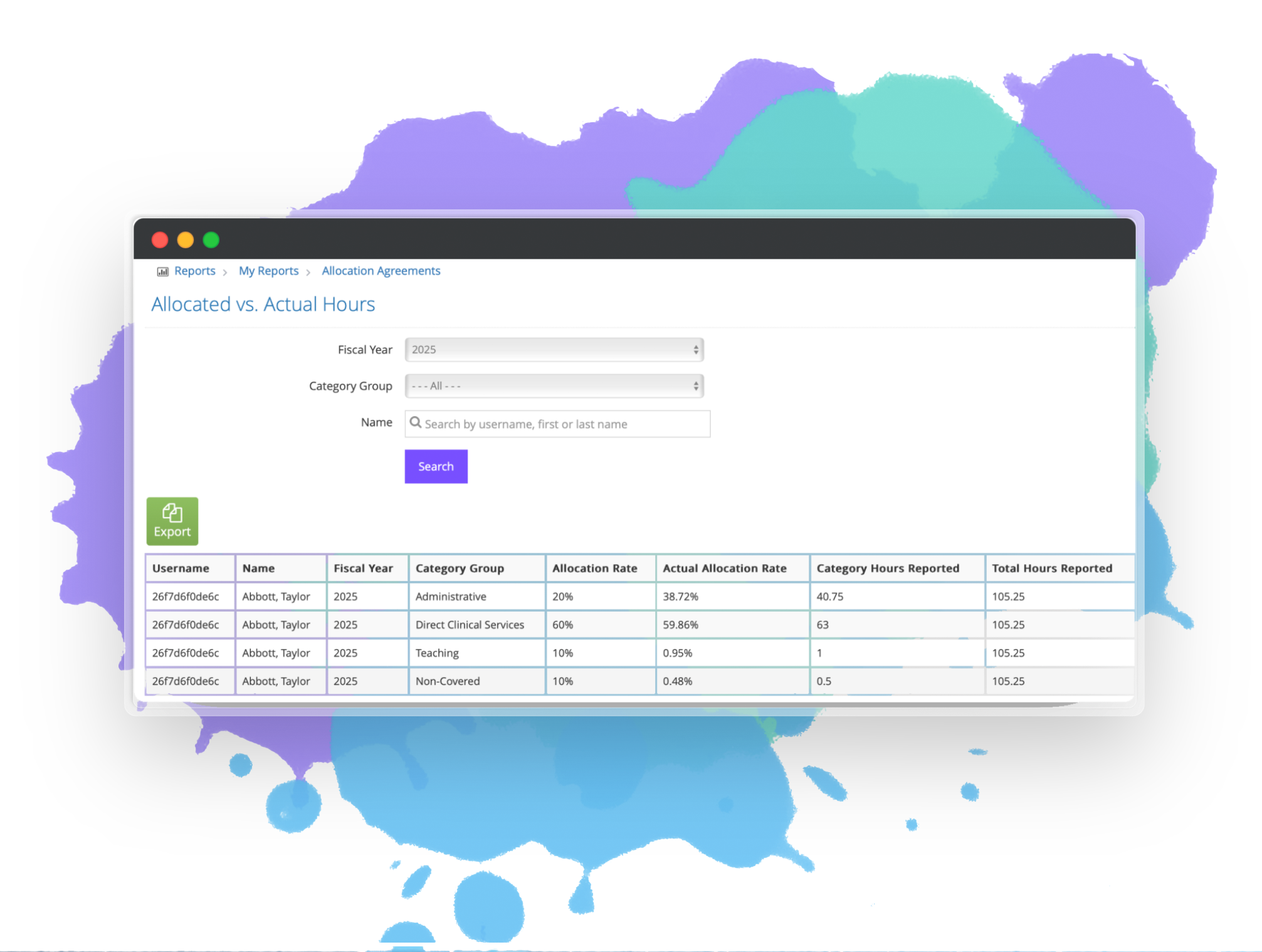
AI-Assisted Validation
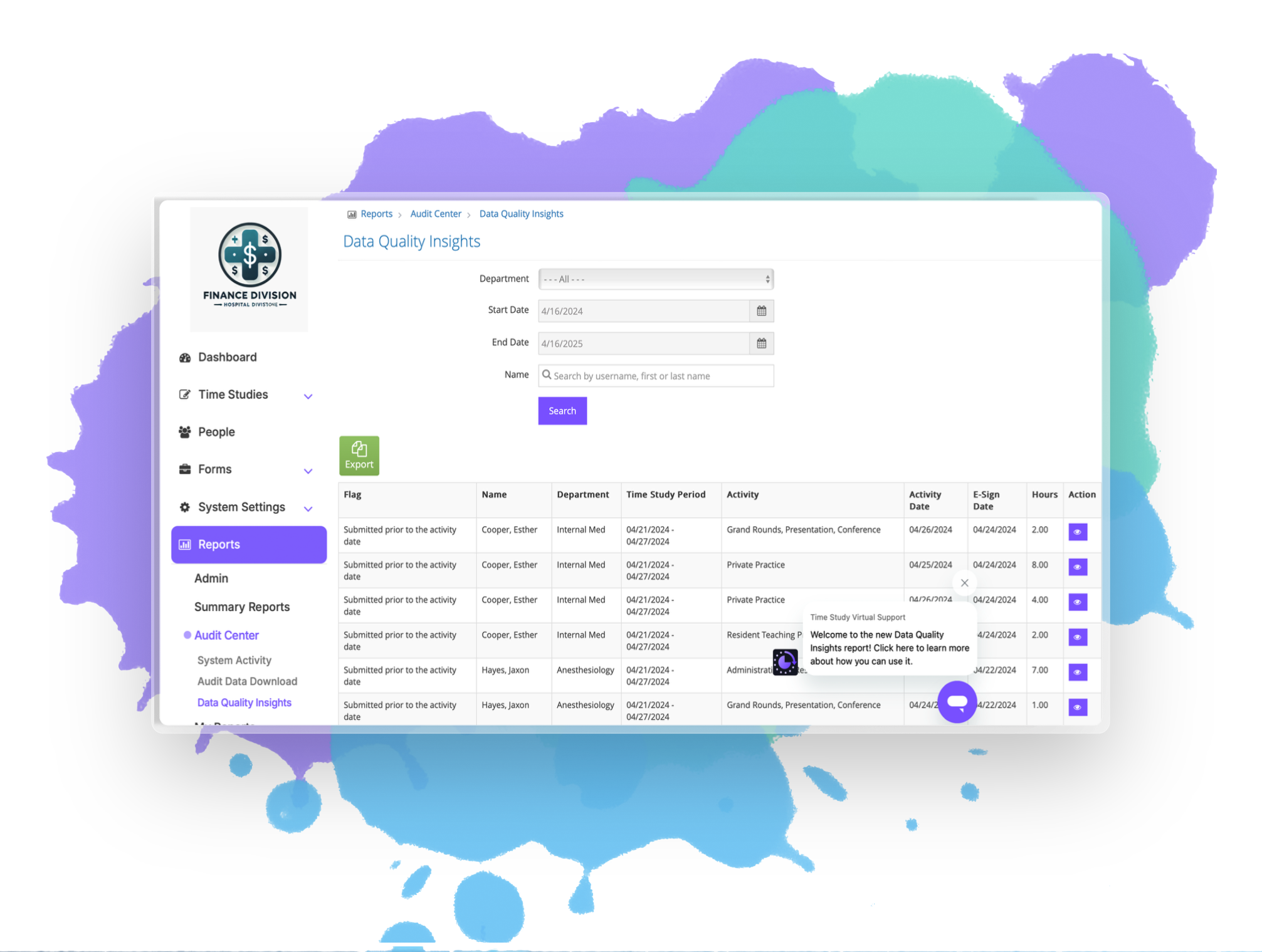
Machine learning identifies anomalies, inconsistencies, and categorization errors across large datasets – catching what manual review can't at scale.
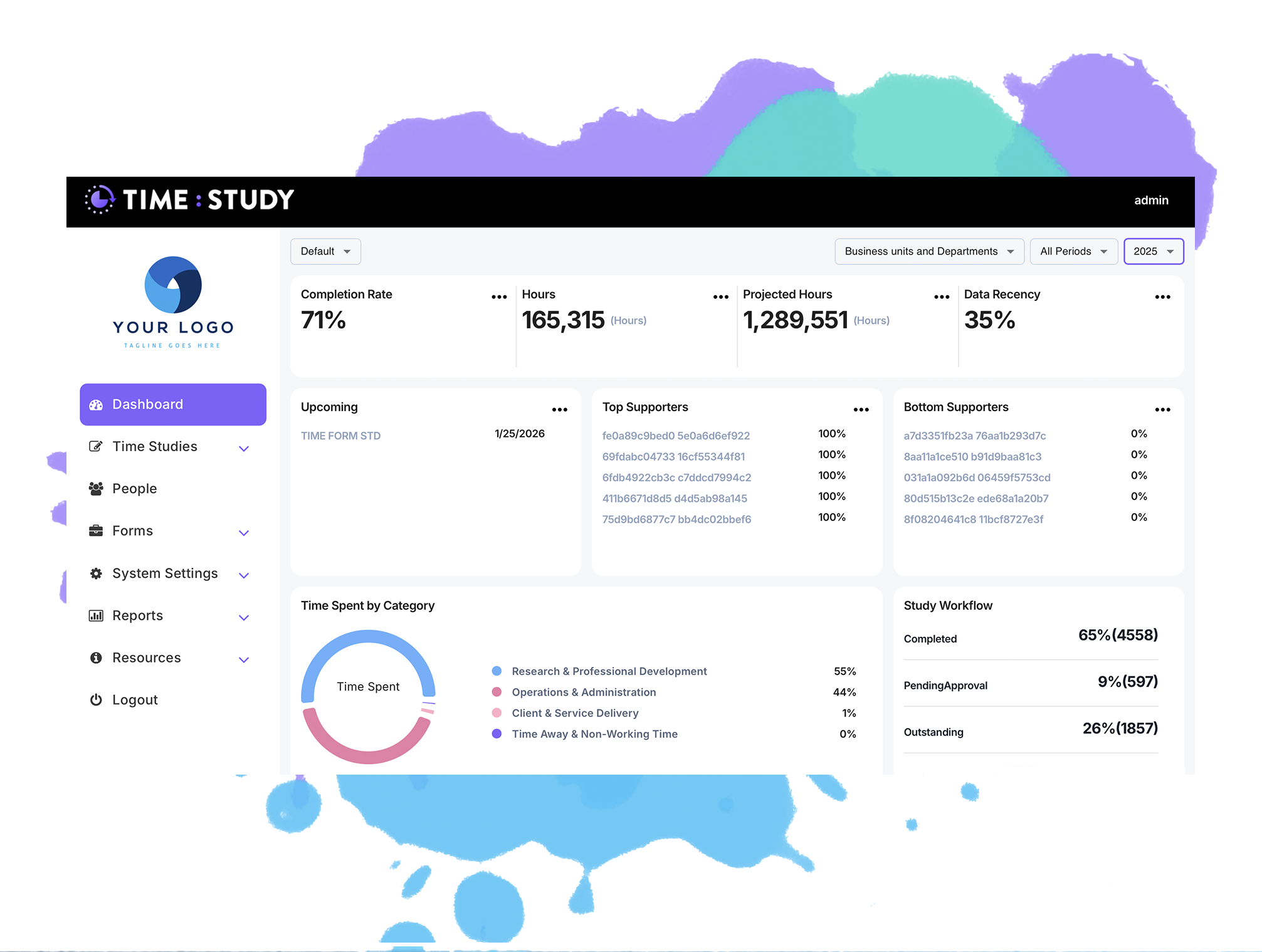
Continuous Intelligence
Replace periodic study snapshots with an ongoing stream of structured time data that reflects current operations – not a window from three months ago.
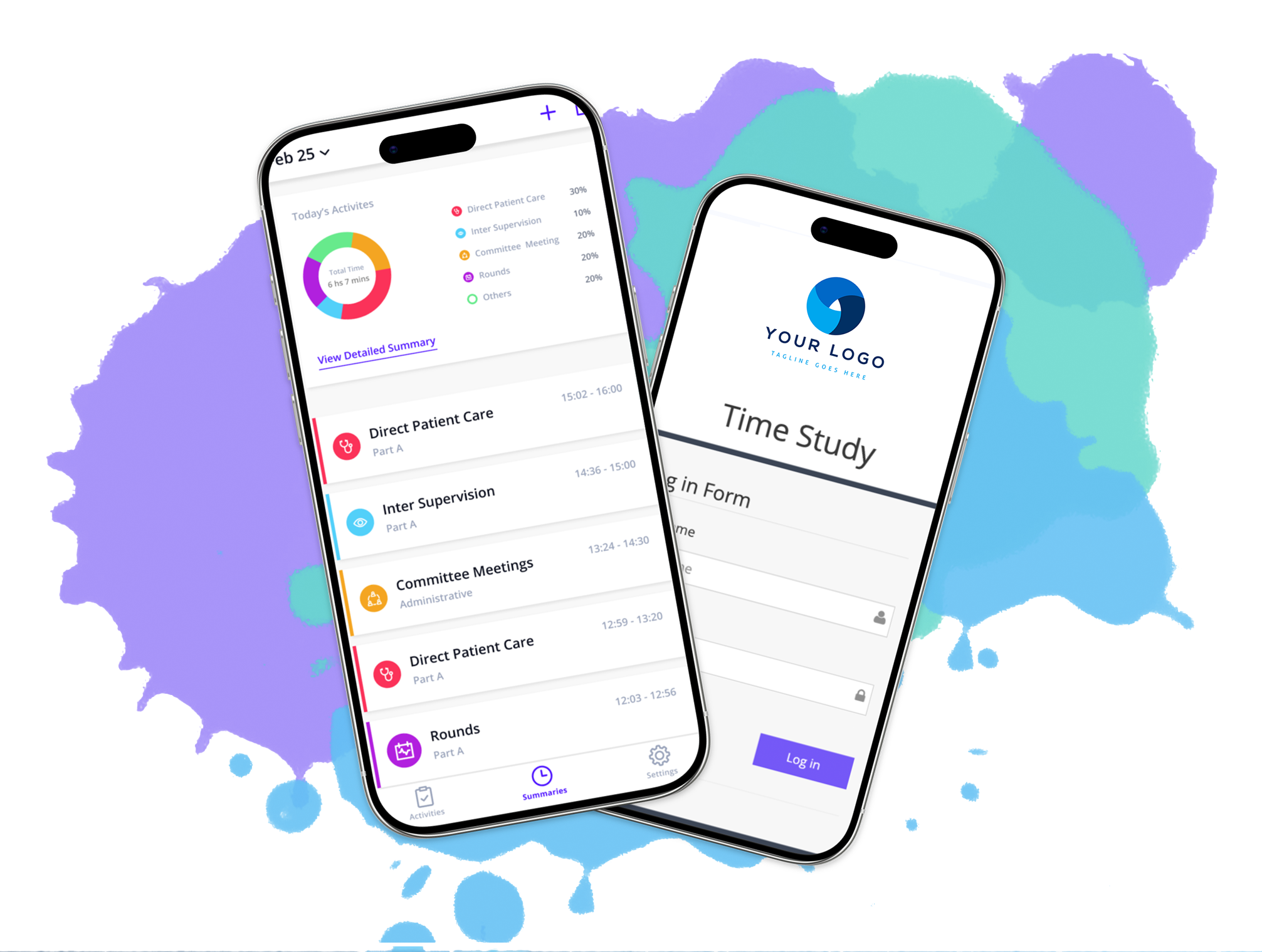
Automated Data Activation
Connect scheduling, HR, calendar, project, and existing enterprise systems to generate structured time data, reducing manual effort without sacrificing accuracy or defensibility.

Why It Matters
What Changes When Time Studies Run on Automation
Data collection scales without extra work: Expand time studies across more departments, roles, locations, or initiatives without increasing the administrative workload or needing more staff to manage the process.
Errors are caught early: Automated validation cleans the data at the source, ensuring inaccurate entries are corrected before they ever reach your operations, financial or cost reports.
Decisions are based on current reality: Continuous data collection replaces the traditional snapshot approach, giving teams a more current view of how work is actually happening.
Direct pipeline to your analytics tools: The platform outputs structured data that feeds straight into your existing dashboards, BI tools, and financial systems without requiring manual exports or formatting.
Compliance data becomes operational intelligence: Information that was previously collected for reporting or compliance can now support planning, resource allocation, process improvement, and day-to-day operational decisions.
AI, Analytics & Automation in Time Studies
How organizations are using automation and AI to move time studies from manual processes to continuous, defensible data systems.
Next Steps
See What Automated Time Intelligence Looks Like for Your Organization
Time Study integrates with the enterprise systems you already operate – activating existing data rather than creating new collection requirements. Implementation is designed to reduce manual effort immediately, not add to it.
Multi-System Ingestion: Securely ingests data from calendars, HRIS, scheduling tools, project systems, operational platforms, and enterprise ERPs.
Algorithmic Data Cleansing: Uses automated collection and AI-assisted validation to identify missing, inconsistent, or inaccurate data earlier in the process.
Turnkey Analytics Pipelines: Delivers structured, standardized datasets that can feed your existing BI tools (Tableau, PowerBI) and data lakes.
Enterprise-Grade Security: Uses automated collection and AI-assisted validation to identify missing, inconsistent, or inaccurate data earlier in the process.
Low-Lift Implementation: Configurable business rules that adapt to your existing data infrastructure without requiring extensive custom engineering.